

Know what every show earns before you send the invoice.
Quotes, free gear, sub-rental, crew and warehouse check-in in one job file. Built for companies that rent AV, lighting and staging.
01 / 06
We understand the week
How a rental job actually runs
Eight steps. The money usually slips in the gaps between them.
- 01
Enquiry
Where it breaks
The brief lives in email. Dates and the room are unclear.
What changes
One job record: client, venue, dates and the ask.
- 02
Quote
Where it breaks
Gear, crew and truck are blended into one number.
What changes
Separate lines for kit, labour, transport and contingency.
- 03
Availability
Where it breaks
The same line array is promised to two shows.
What changes
The quote only offers gear that is free on those dates.
- 04
Sub-rental
Where it breaks
A phone call, then an invoice that does not match.
What changes
A purchase order before the kit is collected.
- 05
Crew
Where it breaks
Freelancer days are remembered after the show.
What changes
Booked crew and day rates sit on the job.
- 06
Warehouse
Where it breaks
Cases leave without a list of what was inside.
What changes
Scan out against the prep sheet.
- 07
On site
Where it breaks
The client adds a mic. Nobody writes it down.
What changes
Changes and a signature from a phone.
- 08
Return
Where it breaks
The invoice goes out before missing kit and crew overtime are known.
What changes
Check-in, match supplier invoices, then bill.
The problems
What event equipment companies lose money on
Quotes go stale
Sub-rental prices and free gear move. A quote left open too long is no longer true.
Equipment-dependent quotes are often held for 14–30 days (Zigaflow quote guide).
The margin is guessed
Labour is often the largest part of the job, and overtime is easy to miss.
Trade guides put labour at 10–50% of the production budget, often 30–50% when a show is crewed.
Sub-rental invoices arrive late
If the client is billed first, a higher supplier invoice comes out of your margin.
Zigaflow: raise a purchase order before collection, and match the invoice to it.
Money leaks after the show
Missing cases, unlogged crew hours and extras agreed on site never reach the invoice.
Post-event reconciliation is where hire companies most often lose money (Zigaflow).
The warehouse and the quote disagree
What was prepped, what went on the truck and what came back are three different lists.
Same guides: check every item back in within 24 hours of return.
Inspections live in a folder
Electrical gear needs a recorded test. A sticker in a drawer does not tell you which job used a failed unit.
Germany example: DGUV Vorschrift 3 covers regular checks of electrical equipment. Each company sets its own interval.
These are trade-guide figures and operating notes, not audited accounts of a named company. Your warehouse will differ. Pro AV, lighting and staging are the focus. Party and décor rental shares the same loop, with less crew and more delivery.
The solution
One job file. Six places it has to be right.
Sample screens with demo data, not a live client result.
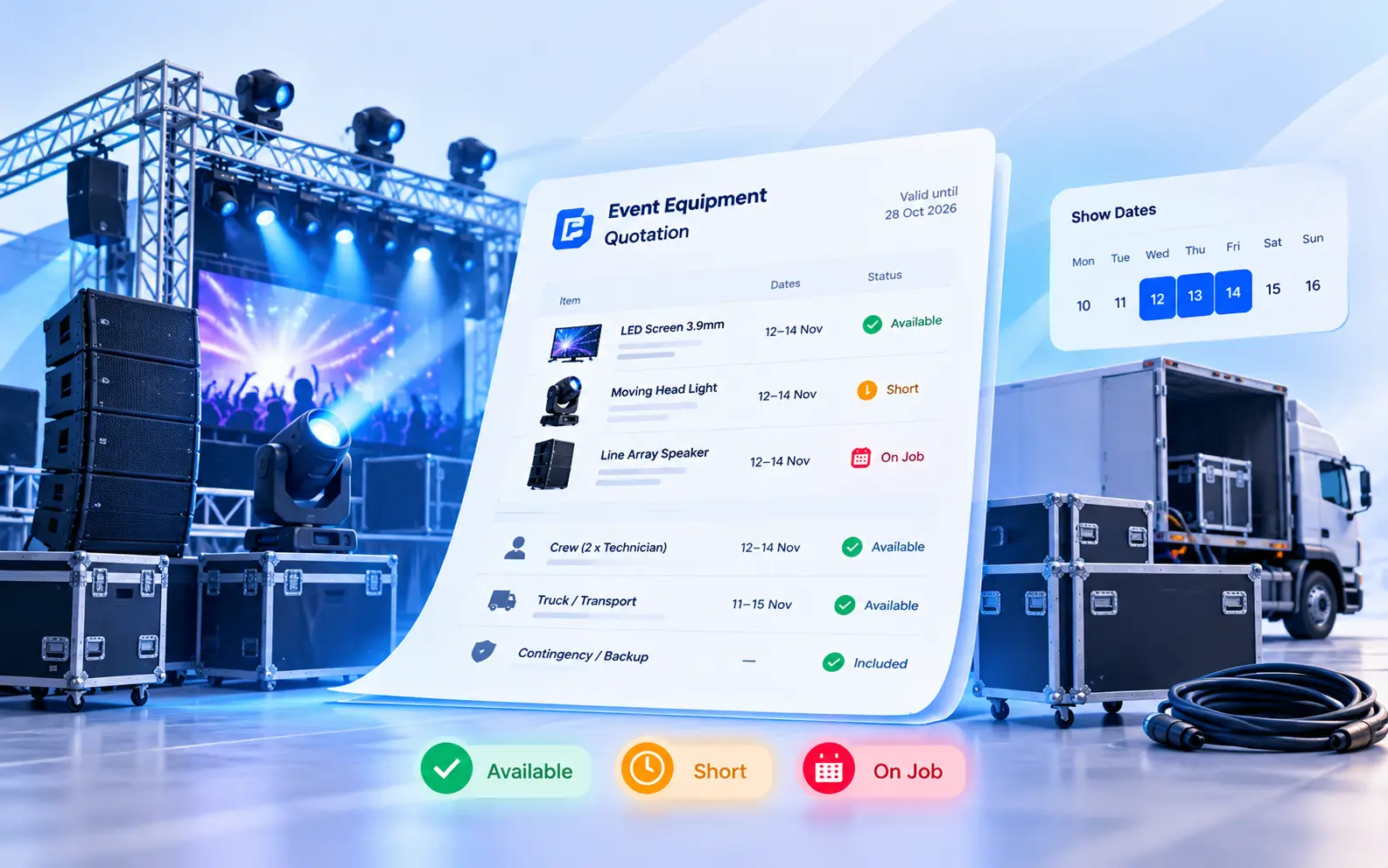
Quotes tied to free gear
Do not sell a line array that is already on another show.
The quote is built from dates. Each line shows whether the item is free, short, or already on a job. Kit, labour, transport and a named contingency stay separate.
- Availability for the show dates
- Kit, crew and truck as separate lines
- Quote validity shown on the document
Research: A common hire rule prices a day at a percentage of what the gear cost to buy. Prices still move when clients compare line by line and when you have to sub-rent.
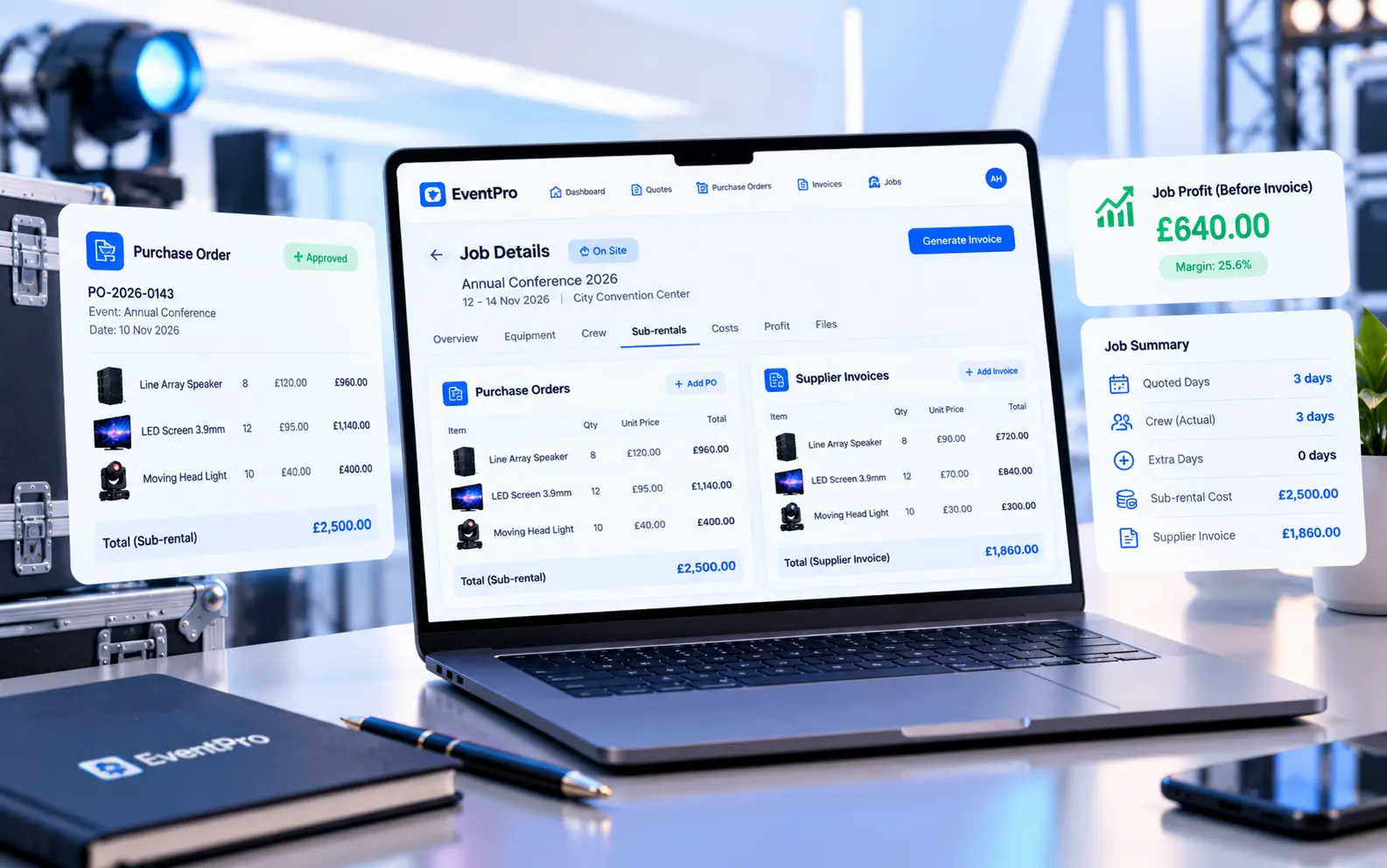
Job profit before the invoice
See sub-rental and crew against the quote first.
Supplier invoices match the purchase orders. Crew days and extras agreed on site are on the job before the client is billed.
- Purchase order before sub-rental collection
- Crew actuals next to the quoted days
- Margin of this job, not a blended monthly guess
Research: Hire guides describe a target gross margin of about 20–35% on the job when kit, labour and cross-hire are tracked separately (Rentman figure, cited by Zigaflow). That is a target, not a result we claim.
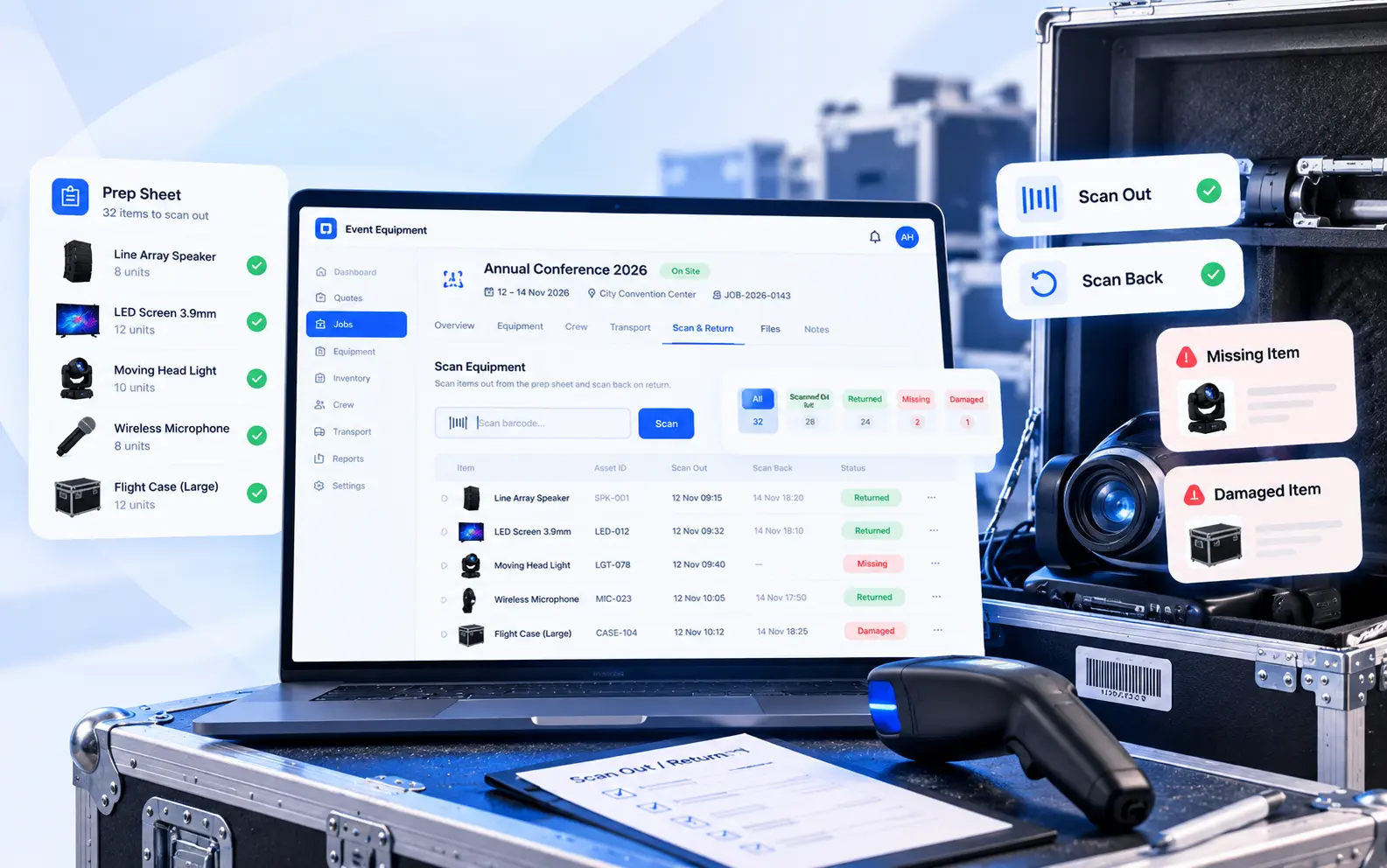
Scan out and scan back
The truck list is the quote list.
Prep scans each case against the job. Return scans the same list, so a missing fixture is visible while the show is still fresh.
- Scan out from the prep sheet
- Scan in on return
- Missing and damaged items on the job
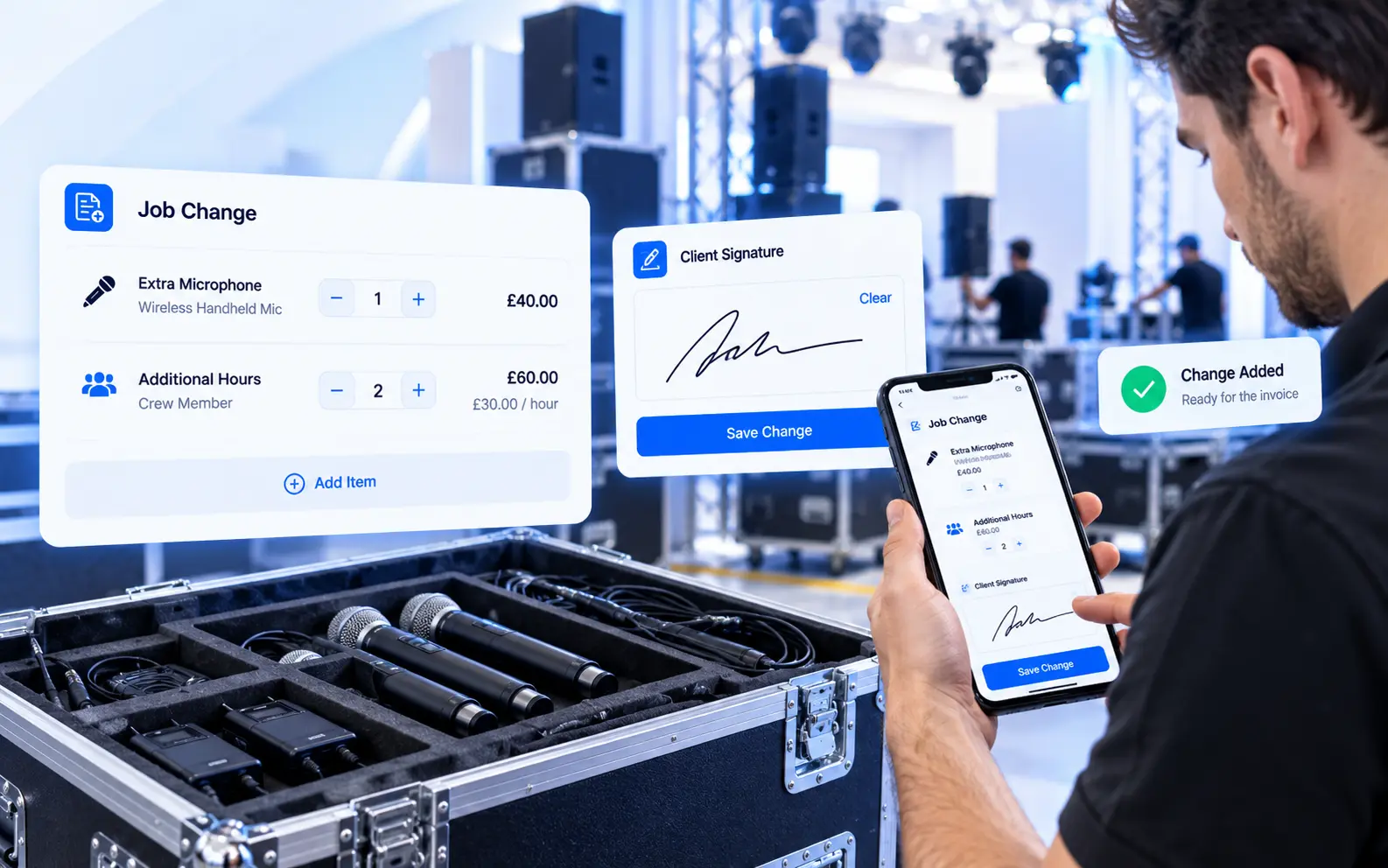
Changes on site
An extra mic is a line, not a favour.
The show caller adds gear or hours on a phone. The client signs. That line is ready for the invoice.
- Add kit or hours from a phone
- Client signature on the change
- No retyping when you are back at the desk
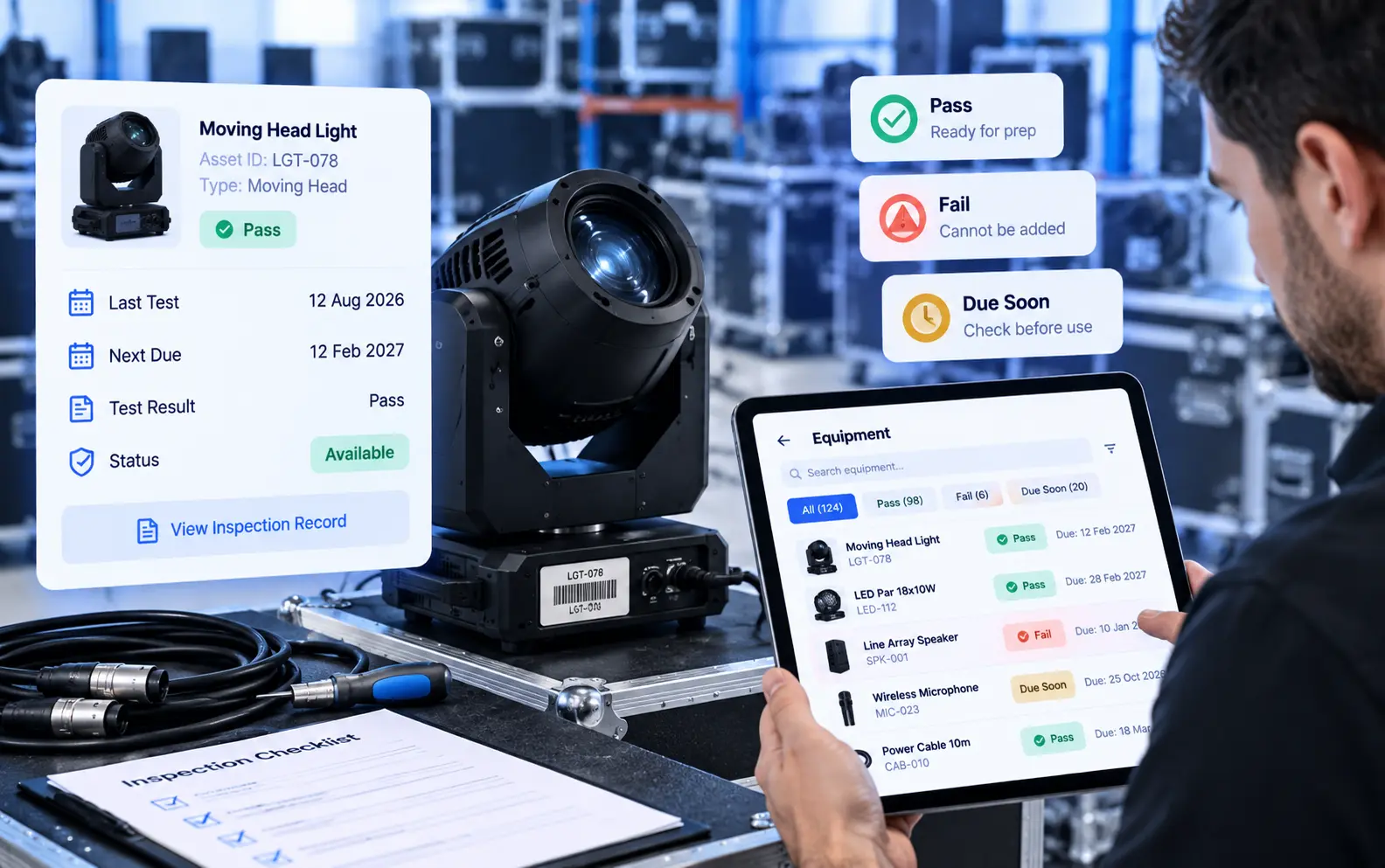
Inspection on the asset
Know which fixture is due before it leaves.
Each moving light, distro and cable has its last test and the next due date. A failed unit cannot be quietly added to a prep sheet.
- Pass, fail and next due on the item
- Blocked from prep when the test is overdue
- A record you can show an insurer or a venue
Research: In Germany, DGUV Vorschrift 3 expects documented electrical inspections. Employers set the interval. The record has to live on the asset, not in a shared inbox.
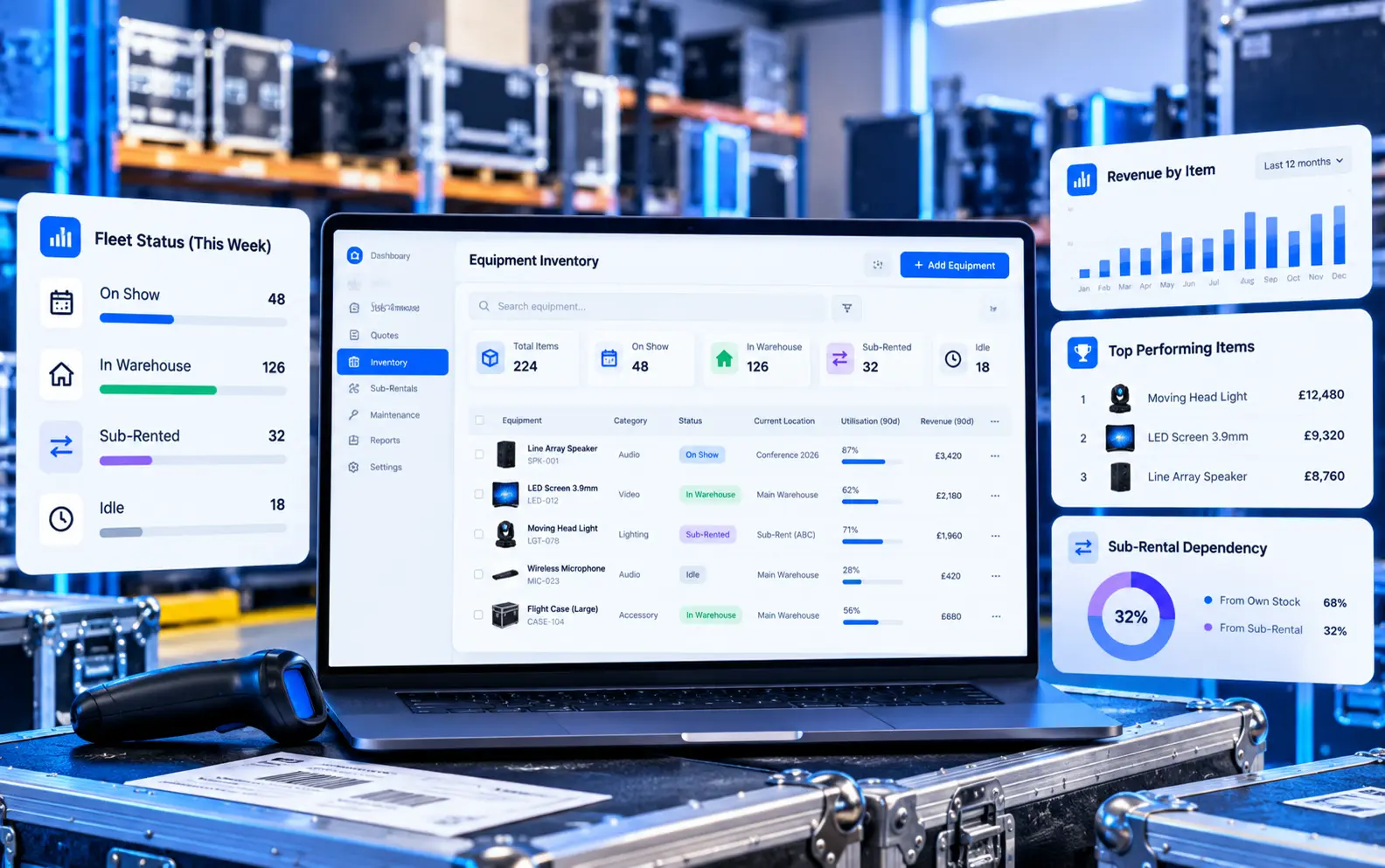
What the inventory actually does
On show, in the warehouse, sub-rented, or idle.
Owners see which items earn and which sit. Sub-rental dependency is visible, so you know what is worth buying next.
- Status of the fleet this week
- Yield per item over time
- How much of the quote was someone else's kit
What research says
Numbers we can actually stand behind
- Trade guides
10–50%
of a production budget is labour. Crewed corporate shows are often at the high end.
DJC West and Elite Multimedia pricing guides; Zigaflow operations notes
- Trade guide
14–30 days
is a typical validity window for a quote that depends on free gear and sub-rental prices.
Zigaflow, event AV quoting
- Trade guide
24 hours
is the window hire guides give to check kit back in, before missing items get hard to trace.
Zigaflow, equipment and crew operations
Start small
You do not have to replace the whole rental system on day one
- 1
Start: quotes that check availability
- 2
Next: sub-rental purchase orders and crew on the job
- 3
Then: scan out, scan in, and inspections
Pilot
Pilot starting: we are looking for two rental companies
Pro AV, lighting or staging. We will put availability on the quote, or scan-out on the dock, and measure one real month with you.
Join the pilotGetting started
How we start
- 1
30-minute call
You walk us through the last three jobs, from brief to invoice.
- 2
We map the leaks
Where the quote, the warehouse and the supplier invoice stop matching.
- 3
Small pilot
One part first. Usually availability on the quote, or scan-out.
- 4
Roll out
Crew, sub-rental and inspections follow once the first loop is trusted.
FAQ
Questions rental owners ask
Yes. Prep, return and on-site changes are meant for a phone or a tablet, not only an office desktop.
No. We can start with one loop, such as availability on the quote, and leave the rest of your tools in place while you try it.
You raise a purchase order before the kit is collected. When the supplier invoice arrives, it is matched to that order and to the job.
You do. Inventory, jobs and customers stay yours.
We set invoices for the country you bill in. Tell us the rules on the first call so they are in scope.
Yes. The people who scan cases and the people who send quotes both get a walkthrough of the part they use.
Let's look at your last three jobs.
30 minutes. No pitch deck. We follow one show from the quote to the invoice and mark where the margin moved.
Book a 30-minute call